Chimichurri Sauce Recipe You’ll Want to Put on Everything
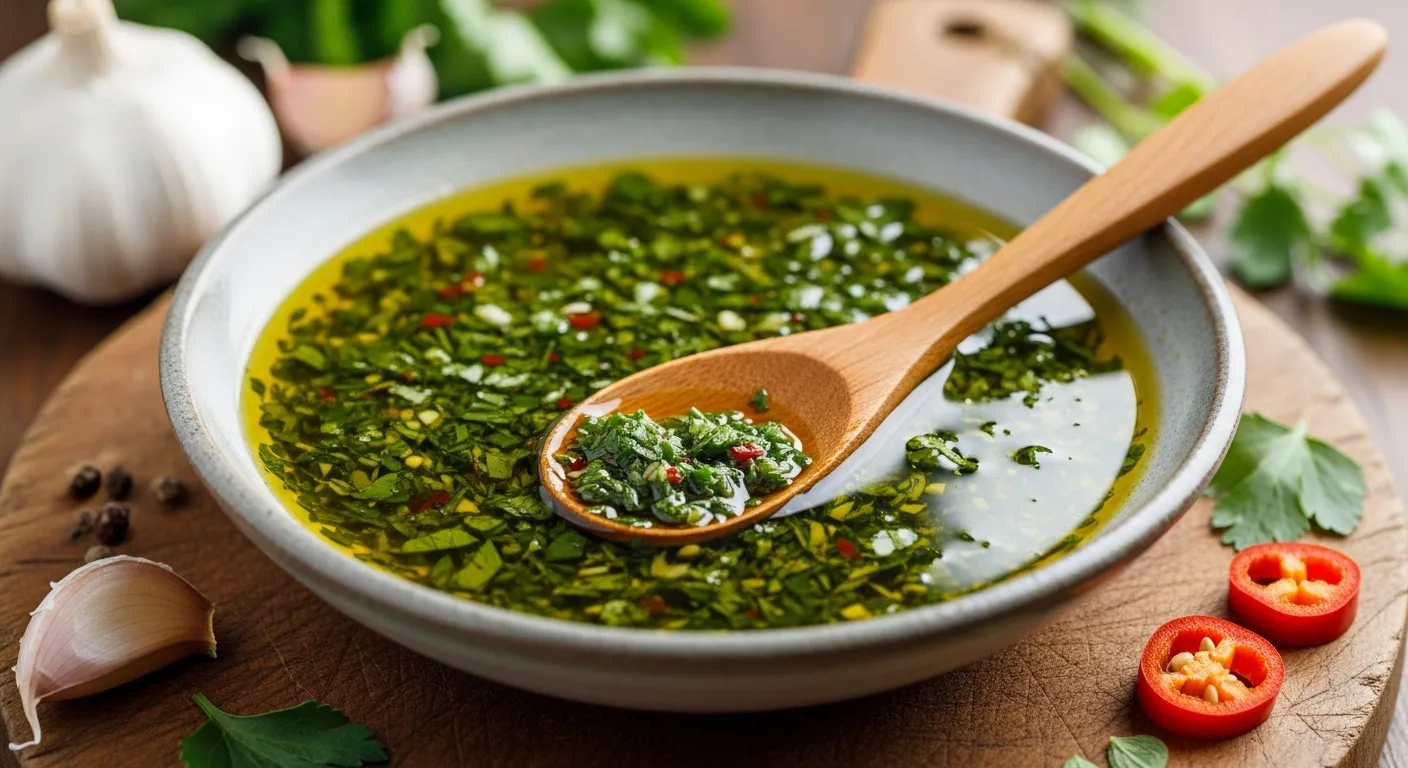
Bright, herbaceous, and bursting with bold Argentinian flavors, this Chimichurri Sauce Recipe is the ultimate condiment that transforms any grilled meat, seafood, or vegetable into something extraordinary. This vibrant sauce features fresh parsley and oregano blended with garlic, red wine vinegar, and olive oil, creating a zesty, garlicky finish that cuts through richness beautifully. It’s the kind of sauce that fills your kitchen with fresh aromas and makes every dish taste like it came from a South American steakhouse.
Each spoonful delivers a satisfying combination of textures—finely chopped herbs, punchy garlic, tangy vinegar, and smooth olive oil. Whether you’re making it for a weekend BBQ or elevating a simple weeknight dinner, this Chimichurri Sauce Recipe is as easy to prepare as it is versatile. Drizzle it over grilled steak, roasted chicken, grilled fish, or roasted vegetables for a colorful, flavorful addition that feels like a celebration of fresh ingredients.
Why You’ll Love This Chimichurri Sauce Recipe
- Fresh and vibrant: Made with fresh herbs and simple ingredients, it tastes like sunshine in a bowl.
- Incredibly versatile: Perfect for beef, chicken, pork, fish, vegetables, or even as a marinade or salad dressing.
- Quick to make: Ready in just 10 minutes with minimal effort—no cooking required.
- Customizable heat: Adjust the spice level with red pepper flakes to suit your taste preferences.
- Lasts for days: This Chimichurri Sauce Recipe keeps well in the fridge, getting even more flavorful as it sits.
Preparation Phase & Tools to Use (Essential Tools and Equipment, Plus Why They Matter)
Before diving into this delicious Chimichurri Sauce Recipe, having the right tools on hand will make everything smoother—from prep to storage.
Essential Tools & Why You Need Them:
Food Processor or Blender
This is the quickest way to make chimichurri. It chops everything evenly and creates a perfectly textured sauce in seconds.
Sharp Chef’s Knife & Cutting Board
If you prefer a more rustic, hand-chopped version, a sharp knife is essential for finely mincing herbs and garlic.
Measuring Cups & Spoons
Precision helps—especially for the vinegar and oil ratio to get that perfect balance of tangy and smooth.
Mixing Bowl (Medium Size)
For combining ingredients if chopping by hand, or for transferring the finished sauce.
Airtight Container or Jar
Essential for storing your chimichurri properly so it stays fresh and flavorful for up to a week.
Whisk or Fork
Perfect for stirring everything together and emulsifying the oil and vinegar if mixing by hand.
Having these items prepped and within reach makes creating this Chimichurri Sauce Recipe seamless and enjoyable.
Preparation Tips
- Use fresh herbs only—dried herbs won’t give you that bright, vibrant flavor that makes chimichurri special.
- Chop parsley finely for the best texture, or pulse carefully in a food processor to avoid making it mushy.
- Let it rest for at least 15-20 minutes before serving to allow the flavors to meld beautifully together.
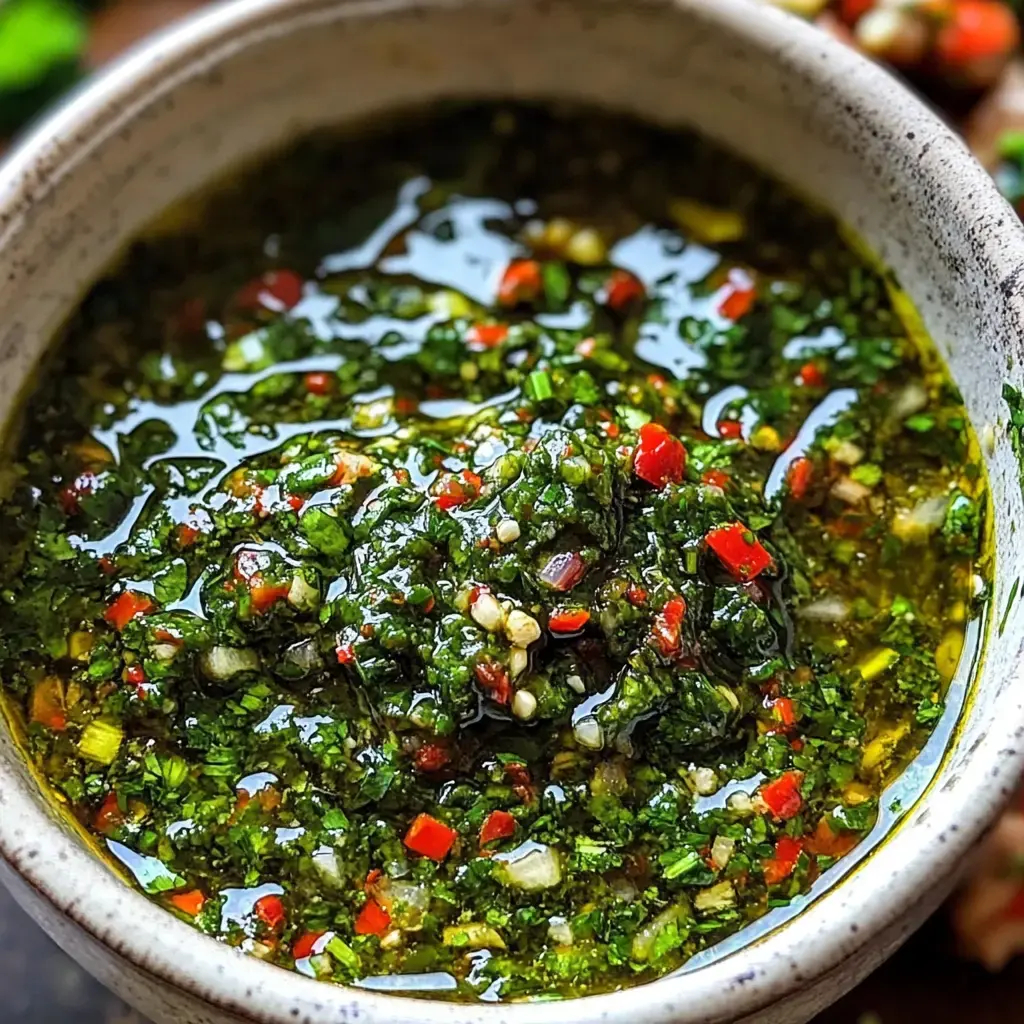
- Don’t over-process—chimichurri should have texture, not be completely smooth like pesto.
- Adjust oil and vinegar to your taste—some prefer it more tangy, others like it more mellow.
- Make it ahead: This sauce tastes even better the next day after the flavors have had time to develop fully.
These small touches make a big difference in achieving authentic, restaurant-quality chimichurri at home.
Ingredients for This Chimichurri Sauce Recipe
Here’s everything you’ll need to bring this bold, fresh sauce to life. All the ingredients are simple and readily available, making this Chimichurri Sauce Recipe both accessible and delicious.
For the Chimichurri Sauce:
- 1 cup fresh flat-leaf parsley, packed (stems removed)
- ¼ cup fresh oregano leaves (or 2 tablespoons dried oregano)
- 6 cloves garlic, peeled
- ½ cup extra virgin olive oil
- 3 tablespoons red wine vinegar
- 1 tablespoon fresh lemon juice
- 1 teaspoon red pepper flakes (adjust to taste)
- 1 teaspoon ground cumin (optional, for depth)
- ½ teaspoon salt (or to taste)
- ½ teaspoon black pepper
Optional Add-ins:
- Fresh cilantro (for a variation)
- Chopped fresh mint
- Lime juice instead of lemon
- Shallots instead of garlic
- Extra red pepper flakes for more heat
- A pinch of smoked paprika
Everything in this list balances freshness and flavor—the herbs provide brightness while the garlic and vinegar add punch. The optional ingredients let you customize this Chimichurri Sauce Recipe to your personal taste.
Step 1: Prepare the Fresh Herbs
Wash the fresh parsley and oregano thoroughly under cold water, then pat completely dry with paper towels or use a salad spinner. Remove the stems from the parsley—you only want the leaves for this Chimichurri Sauce Recipe. Roughly chop the herbs if using a food processor, or mince them finely by hand if you prefer a more rustic texture.
Step 2: Combine the Ingredients
If using a food processor: Add the parsley, oregano, garlic, red pepper flakes, cumin (if using), salt, and black pepper to the food processor. Pulse 8-10 times until everything is finely chopped but not pureed—you want texture, not a smooth paste.
If making by hand: Finely mince the parsley, oregano, and garlic on a cutting board. Transfer to a medium mixing bowl and add the red pepper flakes, cumin, salt, and black pepper.
Step 3: Add the Liquids
Pour in the olive oil, red wine vinegar, and lemon juice. If using a food processor, pulse a few more times to combine. If mixing by hand, whisk everything together vigorously until well blended and slightly emulsified. The sauce should be loose and pourable but not watery.
Step 4: Taste and Adjust
This is the most important step in perfecting your Chimichurri Sauce Recipe. Taste the sauce and adjust seasoning as needed. Add more salt for savory depth, more vinegar for tanginess, more red pepper flakes for heat, or more olive oil if it’s too acidic. The balance should be bright, garlicky, and herbaceous with a pleasant tang.
Step 5: Rest and Serve
Transfer the chimichurri to an airtight container or serving bowl. Let it sit at room temperature for 15-20 minutes to allow the flavors to meld together. This resting period makes a noticeable difference in the final taste.
Serve immediately or refrigerate for up to one week. The sauce will thicken slightly when cold—let it come to room temperature before serving for the best flavor and consistency. Drizzle generously over grilled meats, seafood, vegetables, or use as a marinade.
Notes
Fresh vs. Dried Oregano: Fresh oregano gives the most authentic flavor, but dried works in a pinch. Use half the amount if using dried.
Oil Quality Matters: Since olive oil is a main ingredient in this Chimichurri Sauce Recipe, use a good-quality extra virgin olive oil for the best flavor.
Spice Level: Start with less red pepper flakes and add more gradually—you can always add heat but can’t take it away.
Watch Out for These Mistakes While Cooking
- Using dried parsley: This is a fresh herb sauce—dried parsley lacks the vibrant flavor and color that makes chimichurri special.
- Over-processing in the food processor: Pulsing too long creates a mushy paste instead of a textured, chopped sauce with character.
- Not drying herbs properly: Excess water dilutes the sauce and affects the oil-vinegar balance, making it taste weak.
- Skipping the resting time: The flavors need time to marry—serving immediately means missing out on the full depth of flavor.
- Using poor quality oil: Since oil makes up half the sauce, low-quality or rancid oil will ruin the entire batch.
- Not tasting before serving: Everyone’s palate is different—always taste and adjust seasonings to your preference.
- Storing with metal utensils: The acid in the vinegar can react with metal—use glass or plastic containers for storage.
- Adding too much vinegar: Balance is key in this Chimichurri Sauce Recipe—too much acid overpowers the herbs and makes it harsh.
What to Serve With Chimichurri Sauce Recipe?
This versatile, herbaceous sauce pairs beautifully with countless dishes, elevating simple ingredients into restaurant-quality meals. Whether you’re grilling, roasting, or pan-searing, there’s a perfect pairing for every occasion.
8 Delicious Recommendations:
Grilled Ribeye or Skirt Steak
The classic pairing—chimichurri’s bright acidity cuts through the rich, fatty beef perfectly for an authentic Argentinian experience.
Grilled Chicken Breasts or Thighs
Juicy grilled chicken gets a flavor boost from the fresh herbs and garlic, making simple weeknight dinners exciting.
Pan-Seared Salmon or Sea Bass
The herbaceous sauce complements fish beautifully, adding brightness without overwhelming the delicate flavors.
Grilled Shrimp Skewers
Toss grilled shrimp in chimichurri for a quick, impressive appetizer or light main dish bursting with flavor.
Roasted Vegetables
Drizzle over roasted potatoes, carrots, cauliflower, or zucchini to transform simple veggies into something spectacular.
Grilled Portobello Mushrooms
For vegetarians, meaty portobello caps topped with chimichurri make a satisfying, flavorful main course.
Crusty Bread or Empanadas
Use this Chimichurri Sauce Recipe as a dipping sauce for warm bread, empanadas, or even as a spread on sandwiches.
Grilled Corn on the Cob
Brush chimichurri on grilled corn for a fresh, South American twist on a summer BBQ classic.
These pairings showcase the incredible versatility of chimichurri and bring bold, fresh flavors to your table.
Storage Instructions
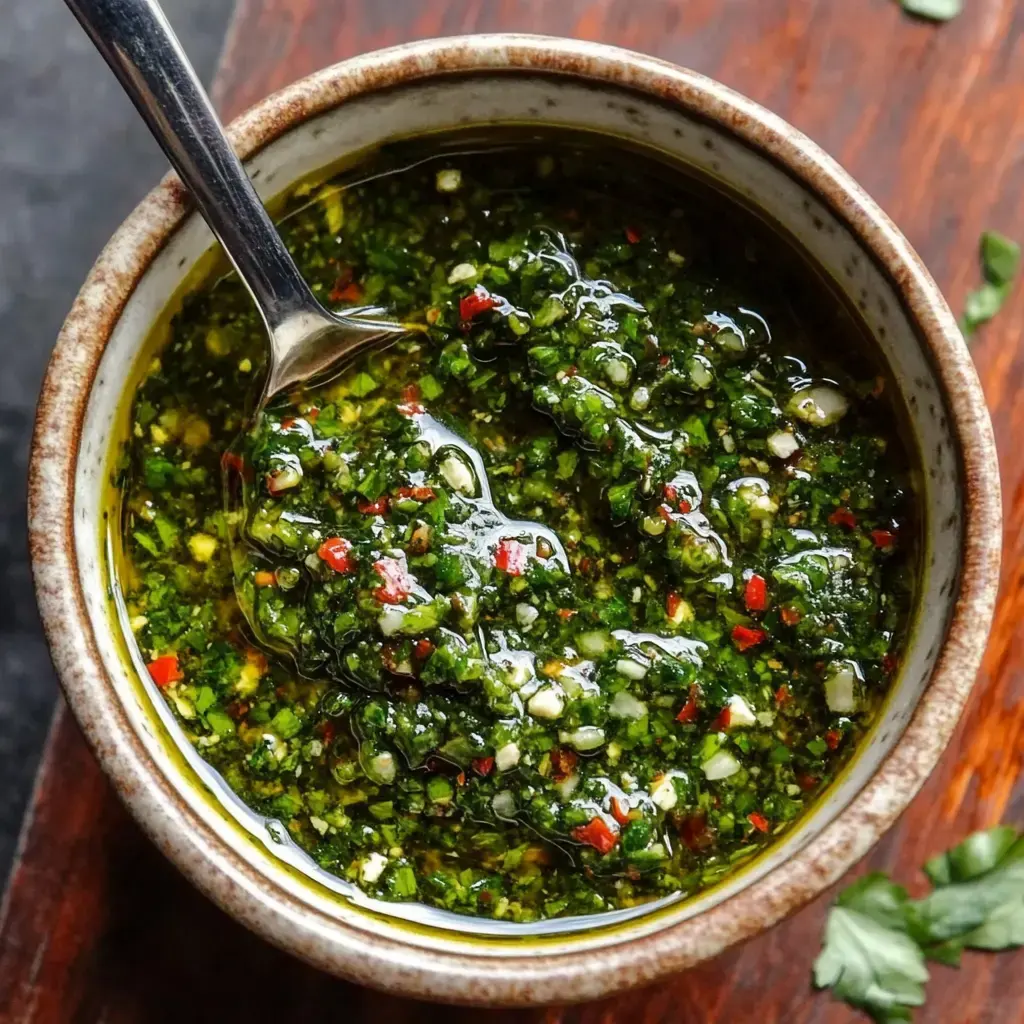
This Chimichurri Sauce Recipe stores beautifully and actually improves with time as the flavors continue to develop.
How to Store:
Refrigerator: Transfer the sauce to an airtight glass jar or container. Cover the surface with a thin layer of olive oil to prevent oxidation. It will keep in the fridge for up to 7-10 days.
Freezer: For longer storage, portion the sauce into ice cube trays or small freezer-safe containers. Freeze for up to 3 months. Thaw in the refrigerator overnight before using.
Serving After Storage:
Bring to room temperature: Remove from the fridge 15-20 minutes before serving for the best flavor and consistency.
Stir well: The oil and vinegar may separate during storage—simply stir or shake vigorously before using.
The sauce may darken slightly over time as the herbs oxidize, but this doesn’t affect flavor.
Estimated Nutrition (Per Serving – Based on 8 Servings)
Please note this is an approximate breakdown and may vary based on exact ingredients used.
| Nutrient | Amount Per Serving |
|---|---|
| Calories | 125 |
| Protein | 1g |
| Carbohydrates | 2g |
| Dietary Fiber | 1g |
| Sugar | 0g |
| Total Fat | 14g |
| Saturated Fat | 2g |
| Unsaturated Fat | 11g |
| Trans Fat | 0g |
| Cholesterol | 0mg |
| Sodium | 150mg |
This sauce delivers healthy fats from olive oil and fresh herbs with minimal carbs—perfect for adding flavor without guilt.
Frequently Asked Questions
1. Can I make this Chimichurri Sauce Recipe ahead of time?
Absolutely. In fact, it’s recommended! Make it 4-24 hours ahead for the best flavor as the ingredients have time to meld together beautifully.
2. Can I use a blender instead of a food processor?
Yes! A blender works well, but pulse carefully to maintain texture. Don’t blend it completely smooth—chimichurri should be chunky.
3. How spicy is this sauce?
The base recipe has mild heat from red pepper flakes. It’s more about fresh, herbaceous flavor than spice—adjust the heat to your preference.
4. Can I substitute cilantro for parsley?
Definitely. This creates a variation closer to Mexican-style chimichurri. You can also use half parsley and half cilantro for a blend.
5. What if I don’t have fresh oregano?
Use dried oregano at half the amount (1 tablespoon instead of 2 tablespoons fresh). It won’t be quite as bright but still delicious.
6. Can this Chimichurri Sauce Recipe be used as a marinade?
Yes! It makes an excellent marinade for meats and vegetables. Marinate for 2-4 hours for best results, reserving some fresh sauce for serving.
7. Why did my chimichurri turn brown?
Oxidation from exposure to air causes browning. While it looks less vibrant, it’s still safe to eat. Pour a thin layer of olive oil on top before storing to minimize this.
8. Can I make it without a food processor?
Absolutely. Hand-chopped chimichurri is traditional and rustic. Just mince everything very finely with a sharp knife—it takes longer but works perfectly.
Conclusion
This Chimichurri Sauce Recipe is the ultimate fresh, herbaceous condiment that brings authentic Argentinian flavor to any meal. With its bright parsley, punchy garlic, and perfect balance of tangy vinegar and smooth olive oil, it’s everything you need to elevate simple grilled meats and vegetables into something extraordinary.
Perfect for summer BBQs, weeknight dinners, or meal prep, this Chimichurri Sauce Recipe is as versatile as it is delicious. Plus, it keeps for days and actually gets better with time. So grab your fresh herbs and make a batch of this incredible sauce—your taste buds will thank you.

Chimichurri Sauce Recipe
Ingredients
Equipment
Method
- Finely chop the fresh parsley and mince the garlic.
- Add parsley and garlic to a mixing bowl.
- Pour in olive oil and red wine vinegar.
- Add oregano, red pepper flakes, salt, and black pepper.
- Stir well until all ingredients are fully combined.
- Mix in fresh lemon juice.
- Let the sauce rest for 15 minutes to develop flavor.
- Taste and adjust seasoning before serving.
Video
Notes
- Store chimichurri in an airtight container in the refrigerator for up to 5 days.
- Allow the sauce to come to room temperature before serving.
- Cilantro can replace parsley for a flavor twist.
- Excellent as a marinade or finishing sauce.