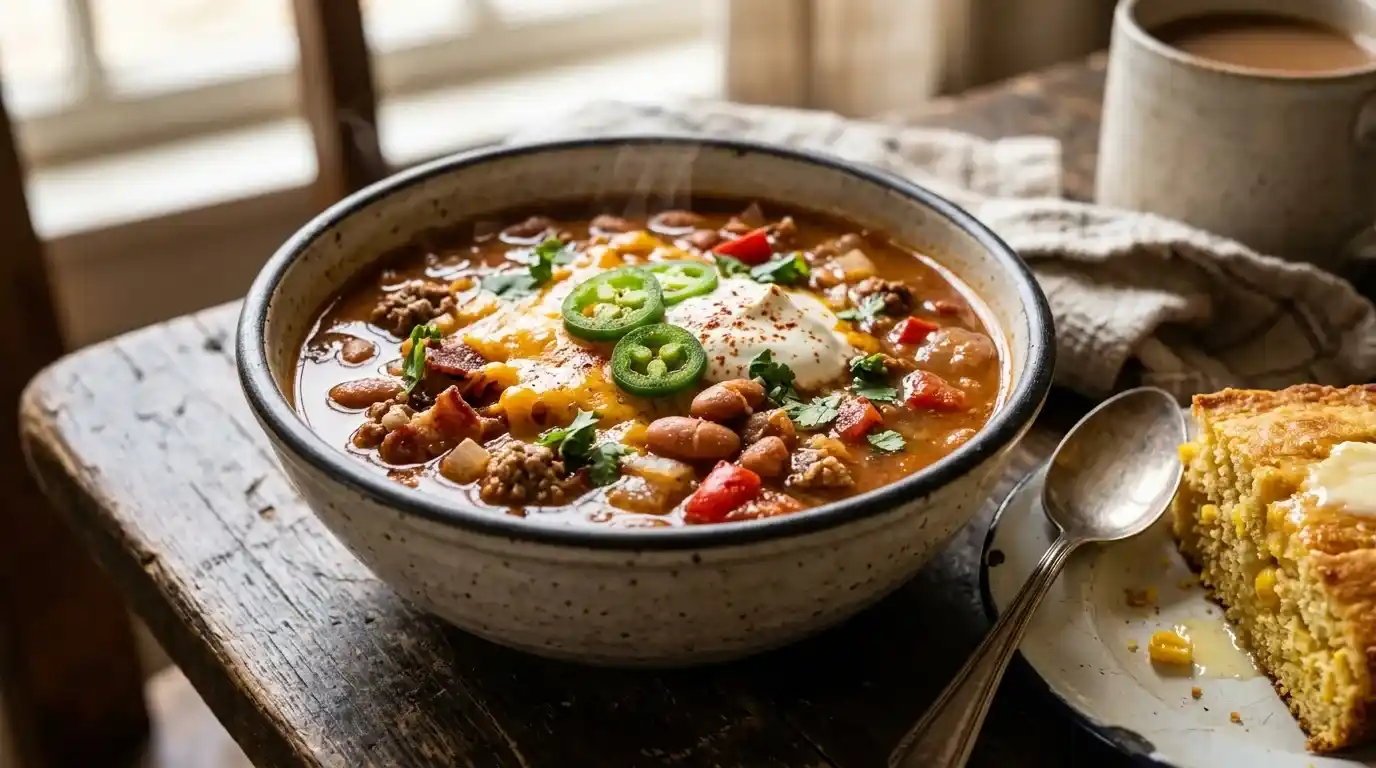
Cowboy Pinto Bean Soup: Hearty Slow Cooker Recipe with Bacon
I still remember standing in my kitchen on that cold Tuesday two years ago, determined to finally get a proper scratch-made pot of soup right. Cowboy Pinto Bean Soup was exactly what I needed — smoky, hearty, and built for a day when nothing else will do. The first version came out thin and flat, and I nearly dumped the whole pot. What I figured out over the next few batches changed the way I cook beans entirely.
Estimated Nutrition Per Serving
| Nutrient | Amount |
|---|---|
| Calories | 310 |
| Total Fat | 11g |
| Saturated Fat | 3g |
| Carbohydrates | 34g |
| Fibre | 9g |
| Sugar | 4g |
| Protein | 18g |
| Sodium | 620mg |
Figures are estimates. Values vary with exact ingredients.
What You Need
The Soup Base
- 2 cans (15 oz / 425g each) pinto beans, drained and rinsed
- 6 oz (170g) smoked andouille sausage, sliced into ½-inch rounds
- 1 cup diced yellow onion (about 1 medium)
- 3 garlic cloves, minced
- 1 can (14.5 oz / 411g) fire-roasted diced tomatoes, with juices
- 4 cups (960ml) low-sodium chicken broth
- 2 tbsp olive oil
Spices
- 1 tsp smoked paprika
- 1 tsp ground cumin
- ½ tsp black pepper
- ¾ tsp kosher salt, plus more to taste
Optional: fresh cilantro, sliced jalapeño, sour cream, shredded cheddar, lime wedges
How to Make Cowboy Pinto Bean Soup Step by Step
Phase 1 — 0 to 15 Minutes: Build the Base
Cowboy Pinto Bean Soup gets its depth from how you start the pot — not from anything you add later. Heat the olive oil in a heavy Dutch oven or wide stockpot over medium-high heat. Add the sausage slices in a single layer and leave them alone for 2 minutes. You want deep golden edges with visible caramelization before you touch them. Flip and repeat on the other side. The sausage is ready when it looks almost too brown — that is exactly right.
Remove the sausage to a plate. Add the diced onion directly into the fat left in the pot. Cook over medium heat, stirring occasionally, until the onion turns soft and just slightly golden at the edges, about 5 minutes. Add the minced garlic, smoked paprika, and cumin. Stir constantly for exactly 1 minute. The spices will bloom into the oil and turn fragrant before they have a chance to burn.
Phase 2 — 15 to 30 Minutes: Add the Liquid
Pour in the fire-roasted tomatoes and scrape the bottom of the pot thoroughly. Those browned bits from the sausage are concentrated flavor — do not leave them behind. Let the tomatoes cook and bubble for 2 minutes so they start to break down slightly. Pour in the chicken broth slowly, stirring as you go.
Return the browned sausage to the pot. Add the drained pinto beans and stir everything together. Raise the heat to bring the pot to a full boil. You will see a light foam rise to the surface — that is normal. Skim it off if you like a cleaner broth, but it will not affect the taste.

Phase 3 — 30 to 75 Minutes: Simmer and Thicken
Cowboy Pinto Bean Soup earns its final character during this long, unhurried simmer. Reduce the heat to low and let the pot cook uncovered for 45 minutes. Stir every 10 minutes or so. The broth will slowly thicken as the starch from the beans works its way into the liquid. At the 45-minute mark, use the back of a wooden spoon or a potato masher to press about a quarter of the beans against the side of the pot. Stir those mashed beans back in. The soup will thicken noticeably within 5 minutes. Taste and adjust salt before serving.
Tips Worth Knowing
Do not add hot sauce during cooking. I leave out the chili flakes and hot sauce that most cowboy bean recipes call for, and every person who tries this at our house asks what makes it taste different. Adding heat mid-cook muddies the other flavors. I am convinced that less is more — serve hot sauce on the side and let each person season their own bowl. The base stays cleaner, and the smokiness comes through clearly.
Use fire-roasted tomatoes, not plain. The char on fire-roasted tomatoes does more work in a soup like this than you would expect. Plain diced tomatoes make the base taste flat. It is a small swap that costs nothing extra.
Let it sit before serving. This soup is noticeably better after 10 minutes off the heat. Resting allows the sausage fat to redistribute and the beans to absorb the seasoning more fully.
What to Serve With This Soup
Cornbread is the obvious choice, and it earns that reputation. The slight sweetness cuts through the smoky broth in a way that bread alone cannot. A slice of skillet cornbread or even a plain corn muffin does the job well.
A simple green salad gives the meal some brightness. Nothing dressed heavily — just something with vinegar and crunch. Shredded cabbage with a lime vinaigrette works particularly well here.
Baked potatoes in the oven are an underrated pairing. Scoop the soup over a split potato and you have a different, more filling meal entirely without any extra work.
Maple bacon baked beans alongside might seem like bean overload, but pinto bean soup and baked beans on a cold night is a genuinely satisfying combination for a crowd.
Make-Ahead Notes
This soup holds well and actually improves overnight. Make the full batch up to 3 days ahead and refrigerate in a sealed container. The broth will thicken considerably as it chills — that is expected. Reheat on the stovetop over medium-low, adding a splash of broth or water to loosen it back to your preferred consistency. Stir occasionally to prevent the beans from sticking to the bottom. The flavors deepen after a day, which makes leftovers better than the original batch.
Troubleshooting
Common Problems and Fixes
PROBLEM: Cowboy Pinto Bean Soup is too thin after 45 minutes of simmering CAUSE: The beans were not mashed at all, or the simmer temperature was too low to reduce the liquid. FIX: Increase heat to medium and simmer uncovered for an additional 10–15 minutes. Mash a generous portion of beans against the pot — up to one-third — and stir vigorously. The starch releases quickly and the soup will thicken within minutes.
PROBLEM: The soup tastes flat despite all the spices CAUSE: Salt was added too early or the sausage was not browned properly. FIX: Add kosher salt in small amounts and stir, tasting after each addition. A squeeze of fresh lime juice also lifts flat flavor more effectively than extra spices.
PROBLEM: Sausage is tough and rubbery CAUSE: The sausage was added to cold oil and cooked too gently. FIX: You cannot undo rubbery sausage once it is in the soup, but the flavor is still there. Next time, start with hot oil and resist turning the sausage too early. It needs dry, direct heat to caramelize rather than steam.
PROBLEM: The broth is greasy on top CAUSE: Too much fat rendered from the sausage during the long simmer. FIX: Lay a sheet of paper towel flat across the surface of the hot soup for 3–4 seconds, then lift it away. Repeat once. This removes excess fat without straining the soup.
Variations
Smoked ham hock version: Replace the sausage with one smoked ham hock. Simmer the hock in the broth for 30 minutes before adding the beans. The resulting broth has a deeper, more traditional flavor. Pull the meat from the hock before serving.
Vegetarian version: Use vegetable broth and replace the sausage with 1 cup of diced portobello mushroom and 1 tsp of liquid smoke. The smokiness carries through convincingly without any meat.
Slow cooker method: Complete Phase 1 in a skillet, then transfer everything to a slow cooker. Cook on low for 6 hours. Mash and stir at the end as described.
Add greens: Stir in 2 cups of chopped kale or spinach during the last 10 minutes of simmering. Both wilt quickly and add color and nutrition without changing the flavor profile.
Spicier version: Add one diced chipotle pepper in adobo sauce along with the garlic. It adds heat and a deeper smokiness that builds gradually rather than hitting all at once.

Storage
Refrigerator: Store in a sealed container for up to 4 days. The soup thickens overnight — add a small splash of broth when reheating.
Freezer: Freeze in individual portions for up to 3 months. Leave a little space at the top of each container as the soup expands. Thaw overnight in the refrigerator.
Reheating: Stovetop over medium-low is best. Microwave works but stir halfway through to distribute heat evenly.
Frequently Asked Questions
Can I use dried pinto beans instead of canned?
Yes, but plan ahead. Dried pinto beans need to be soaked overnight and then simmered separately for 60–90 minutes before they are tender enough to use. One cup of dried beans yields roughly the equivalent of one can of cooked beans. The flavor from dried beans is slightly more earthy and less processed, which some people prefer. If you go this route, cook the beans in unsalted water — salt added too early can toughen the skins.
Why does my soup always smell good but taste bland?
Aroma and flavor are not always in sync with bean soups. The most common cause is under-salting at the finish. Beans absorb a significant amount of seasoning during cooking, so what tasted well-seasoned at the 30-minute mark often needs another round of salt by the time it finishes. Always taste right before serving and season again. Acid also helps — a small squeeze of lime at the table makes a noticeable difference.
How does Cowboy Pinto Bean Soup work as a freezer meal?
Cowboy Pinto Bean Soup is one of the better soups for freezing because the beans hold their texture reasonably well. Portion the cooled soup into freezer bags or rigid containers. Freeze flat if using bags — it saves space and thaws faster. The broth will separate slightly after freezing, which is normal. Stir well while reheating and it comes back together without any issue.
Can I make this in an Instant Pot?
Yes. Use the Sauté function to complete Phase 1 directly in the pot. Add all remaining ingredients, seal the lid, and cook on high pressure for 20 minutes. Allow natural release for 10 minutes before opening. The soup will be thinner than the stovetop version — use the Sauté function again after opening to reduce it to your preferred consistency, then mash the beans as described.
Closing
My son, Callum, ate an entire bowl of this Cowboy Pinto Bean Soup before I had finished ladling out portions for anyone else. He is not someone who comments on food or slows down for a meal. Seeing him go back for a second serving without being asked told me everything I needed to know about this recipe. If you have tried it and changed something that made it better — or if you have a version of your own that your family keeps requesting — I would love to know what you did differently.