

Roasted Root Vegetables Recipe – Easy & Caramelized
I grabbed the balsamic vinegar by accident one evening instead of the olive oil and tossed it over a tray of parsnips and carrots before I noticed — and the result was so much better than anything I had made before that I have used it that way ever since. That accident is now the heart of my Roasted Root Vegetables Recipe, and it is the first thing that surprises people when they taste it. The vegetables turned dark and sticky at the edges, the natural sugars caramelised in a way that plain oil never produces, and the depth of flavour shifted entirely. The technique that makes it happen every time is simpler than you think.
What You Need for This Roasted Root Vegetables Recipe — and Why Each One Earns Its Place
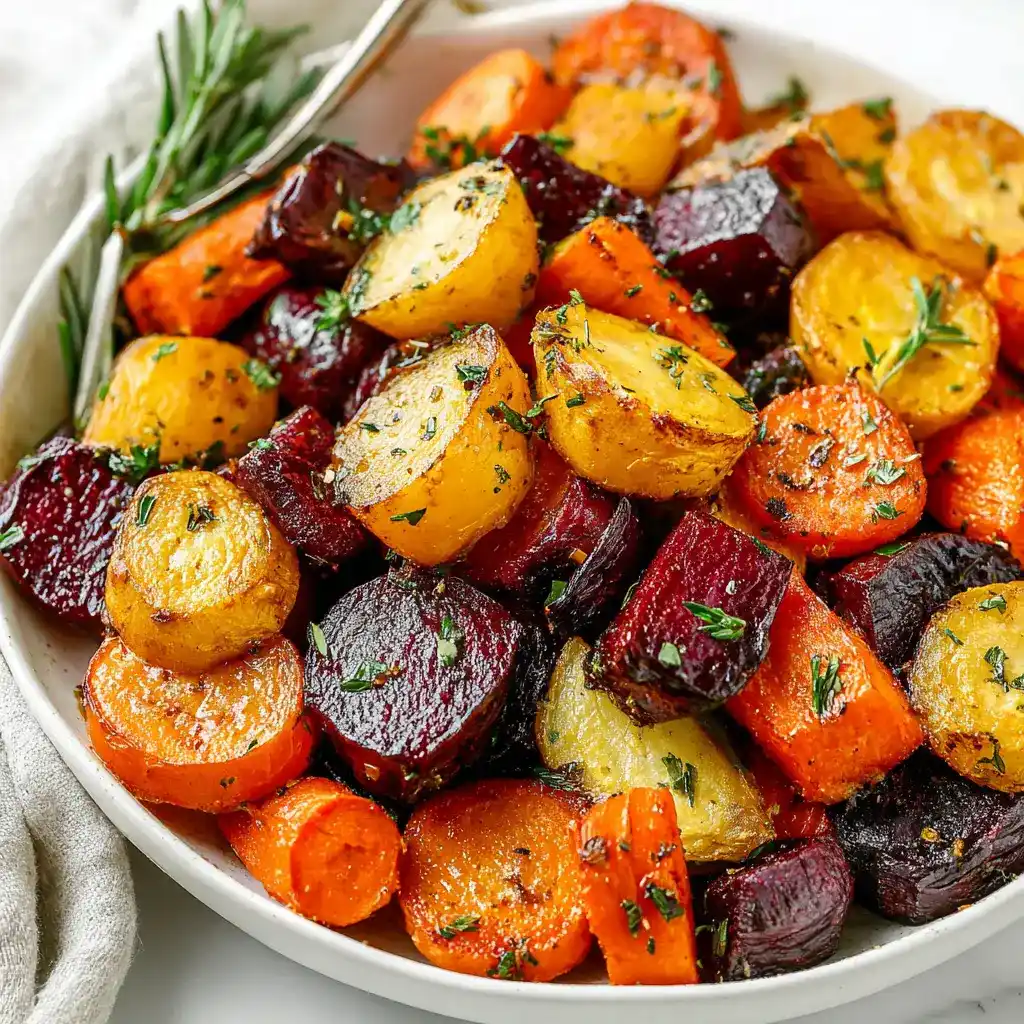
This Roasted Root Vegetables Recipe is built on four root vegetables that roast at similar rates and contrast well in both colour and flavour. Parsnips go sweet and almost honeyed at the edges. Carrots hold their shape and turn slightly jammy. Beetroot brings earthiness and a deep colour that bleeds beautifully across the tray. Celeriac adds a quiet, celery-like note that rounds out the sweetness of the others.
The balsamic vinegar — the accidental discovery from that first evening — is what ties it together. It reduces in the oven heat into a thin, slightly sticky glaze on the cut edges of every vegetable. A small amount of honey encourages that caramelisation without making the dish cloying. The combination makes vegetables that taste like they belong on a dinner table, not just alongside something else.
What You Need
Main Vegetables
- 300g (10.5 oz) parsnips, peeled and cut into wedges roughly 4 cm / 1.5 inches long
- 300g (10.5 oz) carrots, peeled and cut into similar-sized pieces
- 300g (10.5 oz) raw beetroot, peeled and cut into wedges — wear gloves
- 300g (10.5 oz) celeriac, peeled and cut into 3 cm / 1.2 inch cubes
- 1 whole garlic head, halved crosswise to expose the cloves
For the Seasoning
- 3 tablespoons (45ml) olive oil
- 2 tablespoons (30ml) balsamic vinegar
- 1 tablespoon (15ml) runny honey
- 1 teaspoon (2g) dried thyme
- 1 teaspoon (2g) dried rosemary, crumbled
- 1 teaspoon (5g) fine sea salt
- ½ teaspoon (1g) freshly ground black pepper
Optional Garnishes
- Fresh thyme sprigs, scattered before serving
- A small drizzle of extra balsamic vinegar after roasting
- Crumbled goat cheese or feta on top while still warm
How to Make Roasted Root Vegetables Recipe Step by Step
Preparing the Vegetables
Starting this Roasted Root Vegetables Recipe correctly means cutting every vegetable to roughly the same size — this is the most important step and the one most people rush. If your parsnip wedges are twice the size of your celeriac cubes, you will pull out a tray of undercooked parsnips and overcooked celeriac. Aim for pieces no larger than 4 cm / 1.5 inches across the thickest point.
Preheat your oven to 220 C / 425 F. Prepare the beetroot last and keep it separate until just before tossing — the juice stains everything a deep purple if mixed too early. Whisk together the olive oil, balsamic vinegar, honey, thyme, rosemary, salt, and pepper in a large bowl. Add all vegetables and toss thoroughly until every surface is coated. The mixture should smell sharp and herby, with a faint sweetness from the honey.
Roasting Without Steaming
Spread the vegetables across two large rimmed baking sheets in a single layer — this is non-negotiable. A crowded pan steams instead of roasts, and steamed root vegetables have none of the colour or texture this dish depends on. Place the halved garlic head cut-side down on one of the trays. It will soften and caramelise alongside the vegetables.
Roast on the top and middle racks for 25 minutes without opening the oven. Resist the urge to check — every time you open the door you drop the temperature and extend the cooking time. After 25 minutes, rotate the trays between racks and flip the vegetables using tongs. Return to the oven for another 15 to 20 minutes.
Finishing and Serving
The final check is what separates a good batch of this Roasted Root Vegetables Recipe from a great one — look for deep caramelisation on the cut edges, not just light golden colour. The parsnips should be darkened at the tips. Carrots should feel tender when pressed with a fork. The beetroot should have wrinkled edges and look slightly sticky. If anything looks pale, give the tray five more minutes on the top rack.
Remove the garlic head and squeeze the softened cloves out of the papery skin onto the tray. Toss the vegetables once more to distribute the garlic. Taste immediately for salt — roasting concentrates all the flavours, and this often needs just a small pinch more at the end. Serve directly from the tray or transfer to a warm platter.
How to Build a Meal Around These Without Overthinking It
Spatchcock chicken is the most natural pairing — it roasts at the same temperature and can go in the same oven on a lower rack while the vegetables take the top. The chicken juices drip down and baste themselves; the vegetables gain extra flavour from the ambient fat.
For a weeknight, oven baked chicken thighs on the side are all you need. The vegetables are filling enough that no starch is required — just a protein and this tray and dinner is complete.
For a vegetarian meal, a bowl of broccoli cheddar soup alongside makes a satisfying, warming dinner that works particularly well in autumn. The rich, creamy soup pairs with the caramelised, slightly sweet vegetables without competing.
How to Prep This Ahead Without Losing the Texture
Cut and season all the vegetables up to four hours ahead and store them in the mixing bowl covered with plastic wrap in the fridge. Do not add the balsamic and honey until you are ready to toss and roast — the acid from the vinegar begins breaking down the vegetable surfaces if left for more than an hour, and the edges turn mushy rather than caramelising cleanly.
Roast fresh whenever possible. The vegetables reheat reasonably well in a 200 C / 400 F oven for eight minutes, but the texture is noticeably firmer and less sweet than fresh-from-the-oven. Reheating in a microwave makes them limp.
How to Fix the Most Common Problems Before They Happen Again
PROBLEM: Your Roasted Root Vegetables Recipe came out pale and soft rather than caramelised and edged with colour.
CAUSE: The pan was overcrowded, the oven was not fully preheated, or the heat was too low.
FIX: Use two large baking sheets and spread the vegetables in a single layer with space between pieces. Preheat the oven for at least 20 minutes. 220 C / 425 F is the minimum — anything lower produces steamed vegetables regardless of how much space they have.
PROBLEM: The beetroot turned everything else purple and the other vegetables looked and tasted like beetroot.
CAUSE: The beetroot was mixed with the other vegetables too early, or it was cut too small and bled excessively.
FIX: Keep the beetroot pieces large — at least 3 cm / 1.2 inches. Add it to the tray separately from the other vegetables, or place it on its own section of the tray. The colour bleeds less when the pieces are large and the cut surfaces are minimal.
PROBLEM: The garlic burned before the vegetables were done.
CAUSE: The garlic head was placed cut-side up rather than cut-side down, or it was positioned near the oven walls where heat is most intense.
FIX: Always place the garlic cut-side down. It protects the exposed cloves from direct heat and allows them to steam gently in their own moisture while the outer surface caramelises slowly. Position the garlic in the centre of the tray, not the edges.
PROBLEM: The parsnips were perfectly done but the carrots were still firm.
CAUSE: The carrots were cut significantly thicker than the parsnips.
FIX: Parsnips and carrots roast at similar rates only when cut to the same size. Carrots are denser than parsnips and need to be cut slightly smaller — or sliced on the diagonal rather than cut straight across — to cook evenly alongside them.
How to Change This Up Without Starting From Scratch
For a sweeter winter version: swap celeriac for sweet potato and add a pinch of cinnamon to the seasoning — the combination leans warmer and works well alongside roast pork.
For more heat: add half a teaspoon of smoked paprika and a pinch of cayenne to the oil mixture before tossing — the spice toasts in the oven and deepens into the caramelised edges.
For a dairy finish: scatter crumbled feta or soft goat cheese over the hot tray the moment it comes out of the oven, then serve immediately — the cheese softens without melting fully and adds a salty, creamy contrast.
For a herb-forward version: replace the dried thyme and rosemary with two tablespoons of fresh chopped rosemary added in the final five minutes of roasting — fresh herbs scorch if added at the start.
For a nut accent: scatter 30g of roughly chopped walnuts or pecans across the tray in the last ten minutes — they toast alongside the vegetables and add crunch.

The Questions I Get Asked Most About This Dish
Can I add potatoes to the tray alongside these vegetables?
You can, but they need their own tray. Potatoes release significantly more starch and moisture than root vegetables and will steam the other vegetables if crowded together. Cut them into similar-sized pieces and give them a separate sheet pan. They can roast at the same temperature for the same time — just keep them separate and combine on the serving platter.
Why does my garlic always turn bitter when I roast it?
Bitterness happens when garlic is exposed to direct high heat on its cut surface. The outer layer burns before the inner cloves have time to soften. Placing the halved head cut-side down protects it. If individual unpeeled cloves are scattered across the tray rather than a whole head, wrap them loosely in a small piece of foil before roasting — they steam inside and caramelise without burning.
What vegetables should I avoid in a Roasted Root Vegetables Recipe?
A Roasted Root Vegetables Recipe works best with dense, low-moisture vegetables that can handle 40 to 45 minutes of high heat. Avoid courgette, aubergine, tomatoes, and most leafy vegetables — they release too much water and turn soft and mushy long before the root vegetables are done. If you want to add something lighter, roast it on a separate tray for the final 15 minutes only and combine at serving.
Can I make this dish completely oil-free?
Not successfully. Oil is what conducts heat to the surface of each vegetable and creates the caramelisation. Without fat, the vegetables dry out and scorch unevenly instead of browning cleanly. If you want to reduce the oil, two tablespoons is the minimum for a full tray — below that the seasoning does not adhere and the vegetables cook unevenly. Avocado oil works as a substitute if preferred over olive oil.
Estimated Nutrition Per Serving
Serving size: approximately one quarter of the full tray. Makes 4 servings.
- Calories: ~195 kcal
- Total Fat: 8g
- Saturated Fat: 1g
- Carbohydrates: 30g
- Fibre: 7g
- Sugar: 14g
- Protein: 3g
- Sodium: 410mg
Figures are estimates. Values vary with exact ingredients.
Final Words
My son Marco cleared the entire tray before I had a chance to serve anyone else — just stood at the counter and worked through it piece by piece. He is genuinely not someone who notices what he is eating. That reaction told me this Roasted Root Vegetables Recipe had become something worth keeping. If you tried it with sweet potato instead of celeriac, tell me below whether you thought the sweeter version worked as well in the winter months.