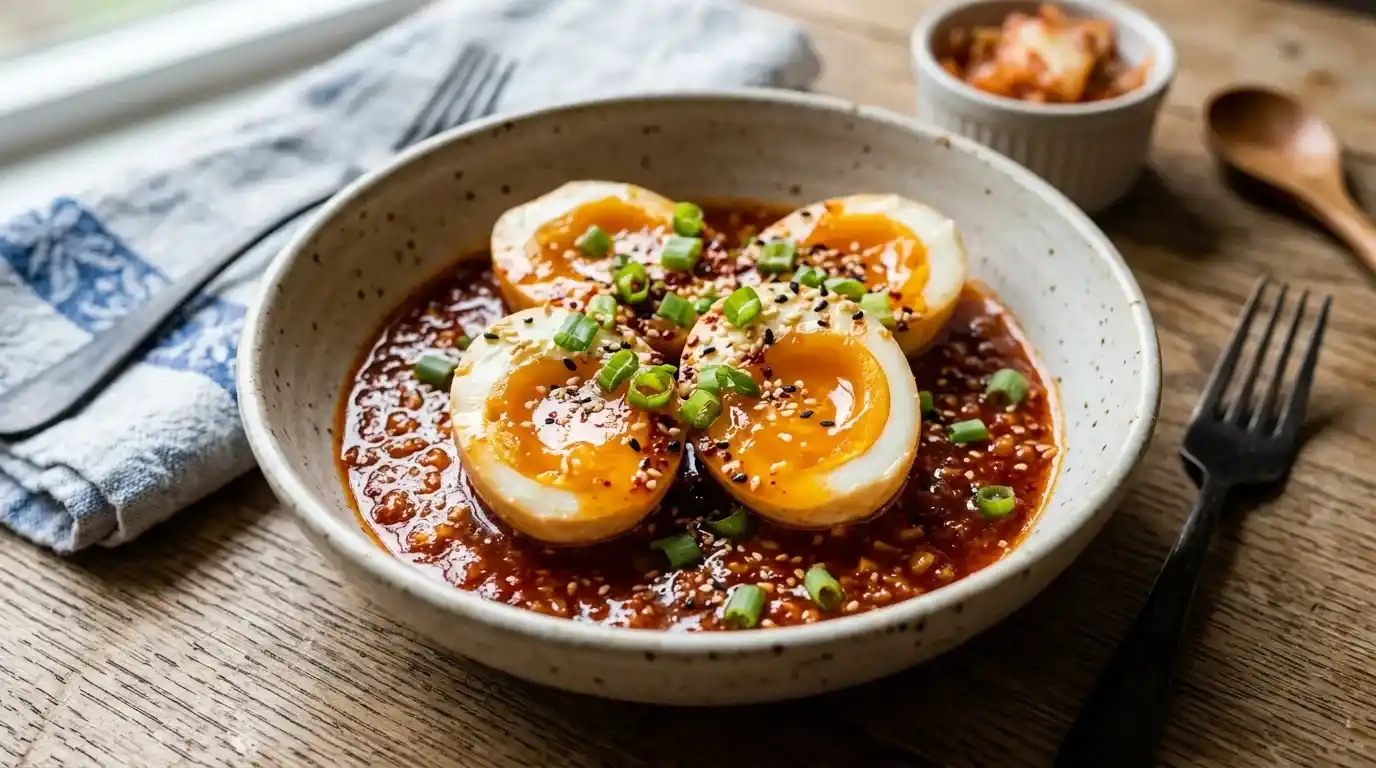
Spicy Gochujang Eggs Recipe – Jammy Eggs in 20 Minutes
Soft, spicy, and full of bold Korean flavors, Spicy Gochujang Eggs Recipe is the best breakfast dish with a delicious kick. This easy recipe has perfectly cooked eggs covered in a rich gochujang sauce that mixes sweet, spicy, and savory tastes all together. It’s the kind of meal that makes your kitchen smell amazing and gets everyone excited to eat breakfast.
Each bite gives you a wonderful mix of soft eggs and spicy sauce that tastes just right. Whether you’re making breakfast for yourself on a busy morning or cooking for your family on the weekend, this Spicy Gochujang Eggs Recipe is as easy to make as it is to enjoy. Add your favorite extras like green onions, sesame seeds, rice, or toast for a colorful meal that you can make your own way.
Why You’ll Love This Spicy Gochujang Eggs Recipe
- Super quick to make: Ready in just 15 minutes, perfect for busy mornings when you need something fast.
- Korean flavors made easy: Real Korean taste with gochujang that gives sweet, spicy, and deep flavor all at once.
- Budget-friendly meal: Eggs are cheap and the other ingredients are simple pantry items you might already have.
- Great for any meal: Perfect for breakfast, lunch, or dinner—this Spicy Gochujang Eggs Recipe works anytime.
- Everyone loves it: The sweet and spicy sauce makes plain eggs taste special and exciting.
Preparation Phase & Tools to Use (Essential Tools and Equipment, Plus Why They Matter)
Before you start making this delicious Spicy Gochujang Eggs Recipe, getting the right tools ready will make cooking much easier from start to finish.
Essential Tools & Why You Need Them:
Non-Stick Skillet or Frying Pan (8-10 inch)
This is the most important tool. A good non-stick pan makes sure your eggs cook perfectly without sticking to the bottom.
Small Mixing Bowl
You need this to mix the gochujang sauce ingredients together before cooking.
Whisk or Fork
Perfect for mixing the sauce until smooth and breaking the egg yolks if you want scrambled style.
Spatula (Rubber or Silicone)
Best for gently moving the eggs around and mixing them with the sauce without breaking them too much.
Measuring Spoons
Getting the right amounts is important, especially for the gochujang and other sauce ingredients.
Cutting Board & Knife
For chopping green onions and any other toppings you want to add.
Having all these tools ready before you start makes cooking this Spicy Gochujang Eggs Recipe smooth and fun.
Preparation Tips
- Use fresh eggs for the best taste and texture—they cook more evenly and taste much better.
- Mix the sauce first before you start cooking so everything is ready when you need it.
- Cook on medium-low heat—too much heat will make the eggs tough and rubbery instead of soft.
- Don’t overcook the eggs—take them off the heat when they still look a little wet because they keep cooking after.
- Taste the sauce before adding to eggs and adjust the spice level to what you like.
- Serve right away: This Spicy Gochujang Eggs Recipe tastes best when it’s hot and fresh from the pan.
These simple tips make a big difference in getting the perfect soft eggs with amazing flavor.
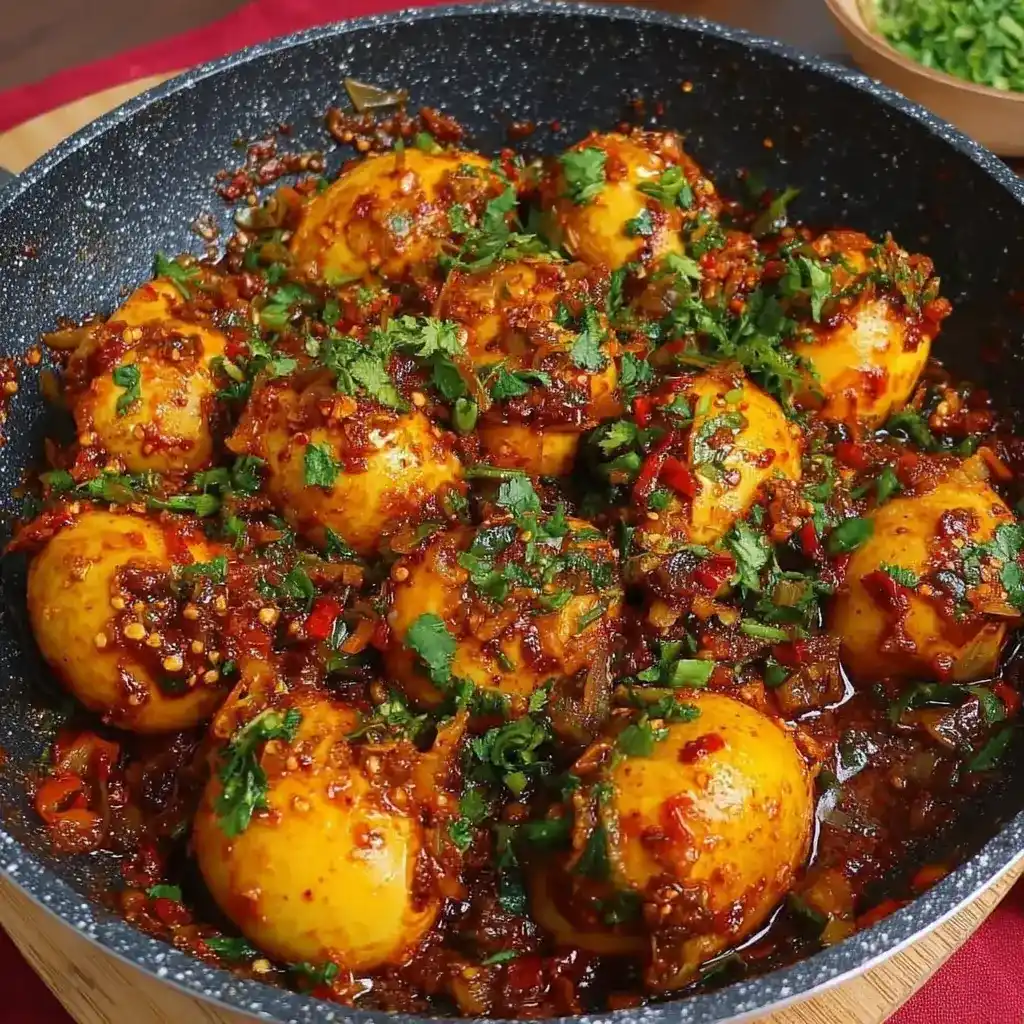
Ingredients for This Spicy Gochujang Eggs Recipe
Here’s everything you need to make this bold, tasty Spicy Gochujang Eggs Recipe come to life. All the ingredients are easy to find at most grocery stores.
For the Eggs:
- 4 large eggs
- 1 tablespoon butter or cooking oil
- Salt to taste
- Black pepper to taste
For the Gochujang Sauce:
- 2 tablespoons gochujang (Korean red pepper paste)
- 1 tablespoon soy sauce
- 1 tablespoon honey or sugar
- 1 tablespoon water
- 1 teaspoon sesame oil
- 1 clove garlic, very finely chopped
- ½ teaspoon rice vinegar
Optional Toppings:
- Chopped green onions
- Toasted sesame seeds
- Fresh cilantro leaves
- Sliced red chili peppers
- Cooked white rice
- Toast or bread
Everything in this list works together perfectly—the spicy gochujang sauce makes simple eggs taste incredible. The toppings are your choice but they make it look pretty and taste even better.
Step 1: Make the Gochujang Sauce
In a small mixing bowl, put the gochujang, soy sauce, honey, water, sesame oil, chopped garlic, and rice vinegar. Mix everything together with a whisk or fork until it’s smooth and well combined. The sauce should be a little thick but pourable. If it’s too thick, add a tiny bit more water. Set this aside while you cook the eggs.
Step 2: Cook the Eggs
Heat your non-stick skillet over medium-low heat. Add the butter or oil and let it melt and spread around the pan. Crack the eggs into the pan. You can cook them sunny side up (don’t flip), over easy (flip once), or scramble them—whatever way you like best.
Season the eggs with a little salt and black pepper while they cook. Cook them gently until the whites are set but the yolks are still a bit soft, about 3-4 minutes for sunny side up. If you’re scrambling, gently stir the eggs with your spatula until they’re soft and just cooked.
Step 3: Add the Sauce
When your eggs are almost done cooking, pour the gochujang sauce all over the eggs in the pan. Let the sauce warm up for about 30 seconds, then gently tilt the pan or use your spatula to spread the sauce around so it covers the eggs nicely.
Step 4: Finish and Plate
Take the pan off the heat right away so the eggs don’t get overcooked. Carefully slide the eggs and sauce onto a plate.
Step 5: Add Toppings and Serve
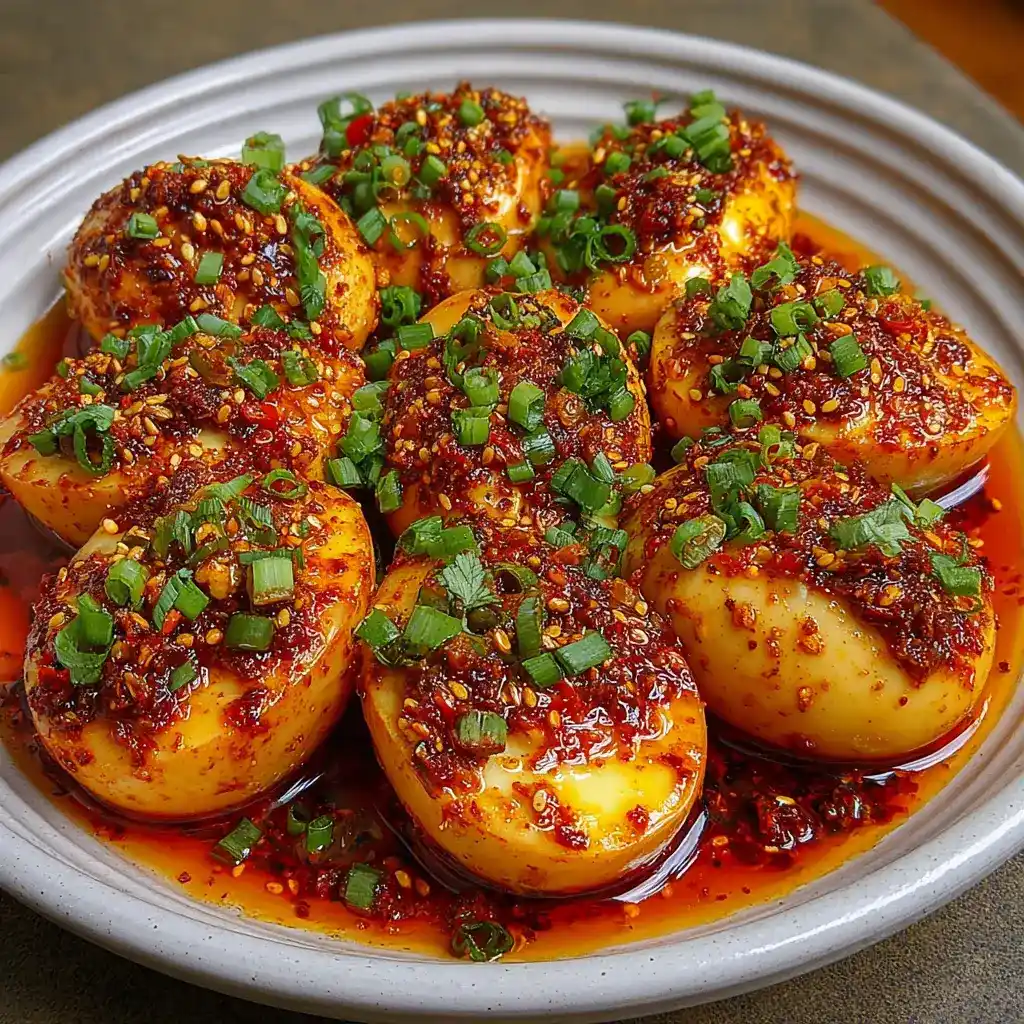
Sprinkle your chosen toppings over the top—green onions, sesame seeds, cilantro, or chili peppers all work great. Serve your Spicy Gochujang Eggs Recipe immediately while it’s still hot. You can eat it with rice, toast, or just by itself.
Notes
Making it Less Spicy: If you don’t like too much heat, use only 1 tablespoon of gochujang instead of 2, or add more honey to make it sweeter.
Different Egg Styles: This Spicy Gochujang Eggs Recipe works with any style—fried, scrambled, poached, or even boiled eggs cut in half.
Make More Sauce: The sauce recipe makes enough for 4 eggs, but you can double it if you want extra sauce for rice or vegetables.
Watch Out for These Mistakes While Cooking
- Using too much heat: High heat makes eggs tough and dry. Always use medium-low heat for soft, tender eggs.
- Not mixing the sauce well: Lumpy sauce doesn’t taste as good. Make sure everything is mixed smooth before adding to eggs.
- Overcooking the eggs: Eggs keep cooking even after you take them off the heat, so remove them when they still look slightly wet.
- Adding sauce too early: Wait until the eggs are almost done, or the sauce might burn on the bottom of the pan.
- Forgetting to taste: Always taste your sauce before pouring it on the eggs so you can adjust sweet, salty, or spicy levels.
- Using old eggs: Fresh eggs taste better and have firmer whites that hold their shape better when cooking.
- Not having toppings ready: Get your green onions and sesame seeds ready before you start cooking so everything is ready to serve hot.
- Skipping the sesame oil: This ingredient adds important nutty flavor that makes the sauce taste authentic and delicious.
What to Serve With Spicy Gochujang Eggs Recipe?
This Spicy Gochujang Eggs Recipe is filling enough to eat alone, but adding the right side dishes can make it a complete Korean-style breakfast or brunch. Here are some great ideas for every taste.
8 Delicious Recommendations:
Steamed White Rice
Plain white rice is perfect for soaking up all that spicy, sweet gochujang sauce from the eggs.
Buttered Toast
Simple toast with butter gives you something crunchy to balance the soft eggs and creamy sauce.
Kimchi
Spicy, tangy fermented cabbage adds extra Korean flavor and a crunchy texture that goes perfectly with eggs.
Sliced Avocado
Creamy avocado helps cool down the spicy heat and adds healthy fats to your meal.
Cucumber Salad
Cool, crisp cucumbers with a little vinegar and sesame seeds make a refreshing side dish.
Roasted Seaweed Sheets (Gim)
Crispy seaweed snacks add a salty crunch and are perfect for wrapping bites of egg and rice together.
Sautéed Spinach
Simple cooked spinach with garlic and sesame oil adds green vegetables and more nutrition.
Miso Soup
A warm bowl of miso soup on the side makes this feel like a real Korean breakfast experience.
These side dishes make your meal more complete and bring real Korean breakfast feelings to your table.
Storage Instructions
This Spicy Gochujang Eggs Recipe is best eaten fresh and hot, but you can save the sauce for later use.
How to Store:
Refrigerator (Sauce Only): The gochujang sauce can be made ahead and stored in a sealed container in the fridge for up to 1 week. Just warm it up when you’re ready to use it.
Cooked Eggs: Eggs don’t store as well after cooking. If you have leftovers, keep them in a sealed container in the fridge for up to 1 day, but they won’t be as soft and good as fresh ones.
Reheating:
Microwave: Heat leftover eggs gently on medium power for 30-45 seconds. Don’t overheat or they’ll get rubbery.
Stovetop: Warm in a pan over low heat with a tiny bit of butter, just until heated through.
For best results, make fresh eggs each time and just keep the sauce ready to use.
Estimated Nutrition (Per Serving – Based on 2 Servings)
Please note this is a close estimate and can change based on exact ingredients used.
| Nutrient | Amount Per Serving |
|---|---|
| Calories | 245 |
| Protein | 14g |
| Carbohydrates | 12g |
| Dietary Fiber | 1g |
| Sugar | 8g |
| Total Fat | 15g |
| Saturated Fat | 5g |
| Unsaturated Fat | 9g |
| Trans Fat | 0g |
| Cholesterol | 375mg |
| Sodium | 680mg |
This Spicy Gochujang Eggs Recipe gives you good protein and healthy fats—perfect for starting your day with energy.
Frequently Asked Questions
1. Can I make Spicy Gochujang Eggs Recipe ahead of time?
The sauce can be made 1 week ahead, but eggs are best cooked fresh right before eating for the softest, best texture.
2. What is gochujang and where can I buy it?
Gochujang is Korean red pepper paste that’s sweet, spicy, and a little bit fermented. You can find it at Asian grocery stores or online.
3. Is this recipe very spicy?
It has medium spice level. You can make it less spicy by using less gochujang or adding more honey to balance the heat.
4. Can I use egg whites only?
Yes, you can use just egg whites if you want less cholesterol, but the yolk adds rich flavor and makes the dish creamier.
5. What can I use instead of gochujang?
If you can’t find gochujang, try mixing red pepper flakes with a little tomato paste, honey, and miso paste, though the taste will be different.
6. Can I make more servings at once?
Absolutely! Just use more eggs and multiply the sauce recipe. Cook in batches if your pan isn’t big enough to hold all the eggs.
7. Is this recipe good for meal prep?
The sauce is great for meal prep, but cook the eggs fresh each morning for the best taste and texture.
8. Can I add vegetables to this recipe?
Yes! Spinach, mushrooms, or bell peppers can be cooked with the eggs to add more vegetables and nutrition.
Conclusion
Spicy Gochujang Eggs Recipe is the perfect way to make simple eggs taste exciting and delicious—all ready in just minutes. With its sweet and spicy Korean sauce and soft, tender eggs, it’s everything you want in a quick breakfast that doesn’t taste boring.
Perfect for busy mornings, lazy weekends, or anytime you want something different, this Spicy Gochujang Eggs Recipe is as easy as it is tasty. Plus, you can change it however you like to make it your own. So grab your pan and make breakfast something you’ll actually look forward to eating.

Spicy Gochujang Eggs
Ingredients
Method
- Heat oil in a saucepan over medium heat.
- Add minced garlic and sauté until fragrant.
- In a bowl, mix gochujang, soy sauce, sugar, and water.
- Pour the sauce into the pan and bring to a gentle simmer.
- Add boiled eggs and coat them evenly with the sauce.
- Simmer for 8–10 minutes, turning eggs occasionally.
- Drizzle sesame oil over the eggs and mix gently.
- Remove from heat once sauce thickens slightly.
- Garnish with green onions and sesame seeds before serving.
Video
Notes
- Adjust gochujang for spice level preference.
- Best served with steamed rice.
- You can slice eggs for better sauce absorption.
- Store leftovers in the fridge for up to 2 days.