Sourdough Starter Recipe – Easy Guide for Beginners
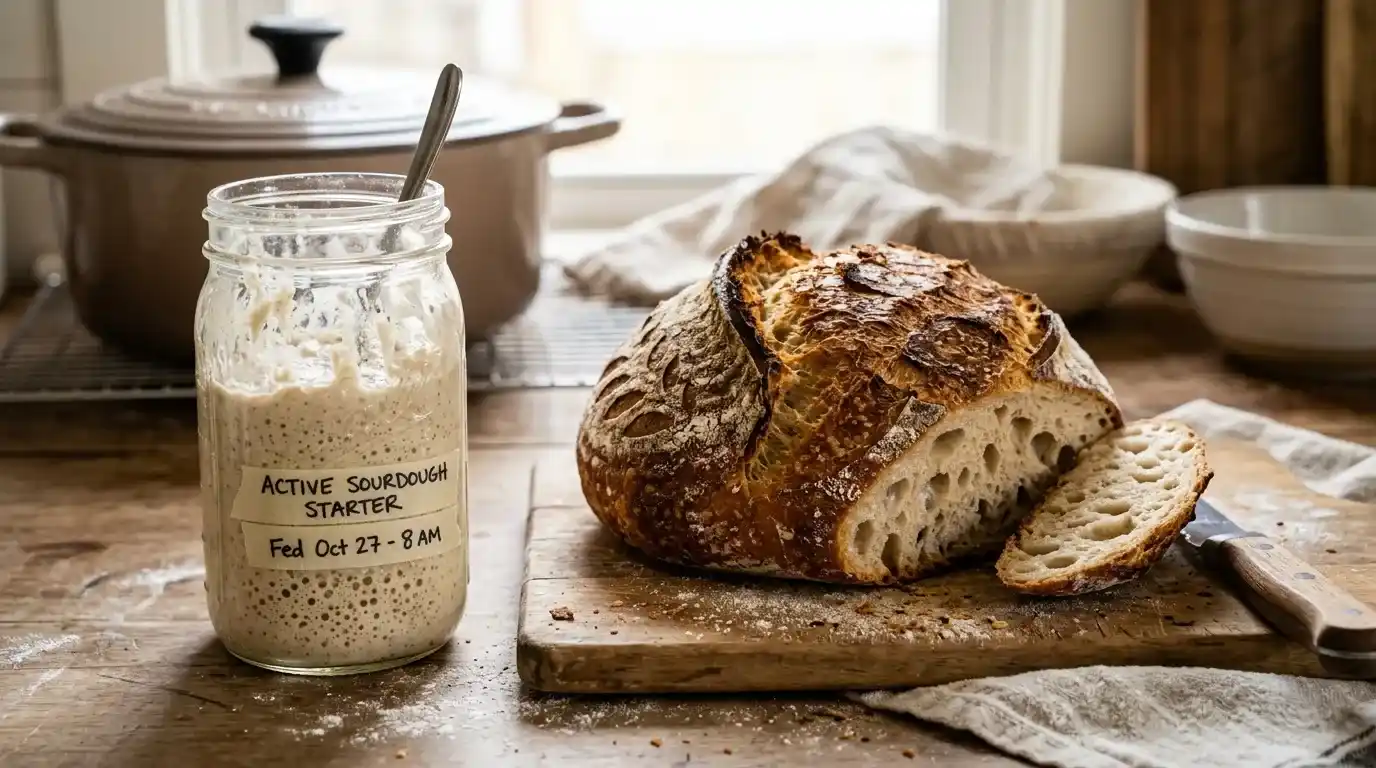
Bubbly, tangy, and full of natural goodness, a Sourdough Starter Recipe is the heart of amazing homemade bread. This simple guide shows you how to make your own living starter using just two basic ingredients—flour and water. It’s the kind of project that feels like magic as you watch it come to life and grow stronger each day.
Each spoonful of this starter brings natural yeast and healthy bacteria that make bread rise without store-bought yeast. Whether you’re new to baking or want to try something traditional, this Sourdough Starter Recipe is as rewarding to make as it is to use. Feed it with love, watch it bubble and grow, and soon you’ll be baking the best bread of your life with flavors that you can’t buy in any store.
Why You’ll Love This Sourdough Starter Recipe
- Just two ingredients: All you need is flour and water—no fancy supplies or hard-to-find items.
- Natural and healthy: No commercial yeast needed—this starter uses wild yeast from the air and flour.
- Saves money: Once you make it, you can keep it alive forever and never buy yeast again.
- Makes better bread: Sourdough bread tastes better, stays fresh longer, and is easier to digest.
- Fun to watch: Seeing your starter bubble and grow is exciting and satisfying every single day.
Preparation Phase & Tools to Use (Essential Tools and Equipment, Plus Why They Matter)
Before starting this simple Sourdough Starter Recipe, having the right tools makes everything easier—from mixing to storing.
Essential Tools & Why You Need Them:
Glass Jar (1-quart size)
This is your starter’s home. Glass is best because you can see through it and watch your starter grow and bubble.
Kitchen Scale (digital)
Measuring by weight is much more accurate than cups. This helps your starter grow strong and healthy.
Wooden Spoon or Spatula
Perfect for mixing flour and water together smoothly without any lumps.
Rubber Band
Use this to mark the level of your starter on the jar. This helps you see how much it grows.
Breathable Cover (cloth or coffee filter)
Your starter needs air but also needs protection from dust. A cloth with a rubber band works great.
Clean Towel
Keep one nearby for wiping the jar and keeping your workspace clean.
Having these simple items ready makes the whole process smooth and easy.
Preparation Tips
- Use room temperature water—not hot, not cold. Water that is too hot will kill the good bacteria.
- Stir well every time you feed your starter to mix in air and help it grow strong.
- Keep the jar clean—wipe down the sides every few days to prevent mold.
- Mark your jar with a rubber band to track how much your starter grows after feeding.
- Be patient in the first few days—your starter might look quiet, but good things are happening inside.
- Feed at the same time each day when possible—your starter likes a regular schedule.
These easy steps help your Sourdough Starter Recipe succeed from day one.
Ingredients for This Sourdough Starter Recipe
Here’s everything you need to create this amazing Sourdough Starter Recipe. The ingredients are so simple that you probably have them in your kitchen right now.
For the Starter:
- 4 cups all-purpose flour or whole wheat flour (divided for daily feedings)
- 4 cups filtered or tap water (divided for daily feedings)
Daily Feeding Ratio (after starter is established):
- ½ cup active starter (discard the rest)
- ½ cup flour
- ½ cup water
Optional Additions:
- Rye flour (makes starter more active)
- Whole wheat flour (adds more wild yeast)
- Pineapple juice instead of water for days 1-3 (helps prevent bad bacteria)
Everything in this list is simple and easy to find. The flour gives food to the yeast, and water helps everything mix and grow. That’s all you need for this Sourdough Starter Recipe.
Step 1: Day 1 – Mix Your First Batch
In a clean glass jar, mix together ½ cup of flour and ½ cup of water. Stir very well with a wooden spoon until you don’t see any dry flour. The mixture should look like thick pancake batter.
Cover the jar with a breathable cloth and secure it with a rubber band. Place the jar in a warm spot in your kitchen, away from direct sunlight. The best temperature is between 70-75°F (21-24°C). Leave it alone for 24 hours.
Step 2: Days 2-3 – Daily Feeding Begins
Every 24 hours, you need to feed your starter. Remove and throw away half of the starter (this is called discarding). To what’s left in the jar, add ½ cup of fresh flour and ½ cup of water. Stir everything together very well.
You might not see much activity yet, and that’s okay. Your Sourdough Starter Recipe is just getting started. Keep feeding it once a day and being patient.
Step 3: Days 4-5 – Watch for Bubbles
By day 4 or 5, you should start seeing small bubbles on the surface and throughout the starter. It might smell a little sour or tangy—this is a good sign. The starter might also start to grow and rise a little after you feed it.
Continue the same feeding schedule: throw away half, add ½ cup flour, add ½ cup water, stir well. Your starter is coming alive.
Step 4: Days 6-7 – Getting Stronger
Your starter should now be very bubbly and active. After feeding, it should double in size within 4-8 hours. It will smell pleasantly sour, like yogurt or beer. When you stir it, you’ll see lots of bubbles throughout.
Keep feeding once a day. If your starter is very active and doubles quickly, you can start feeding it twice a day (every 12 hours) to make it even stronger.
Step 5: Ready to Use
Your Sourdough Starter Recipe is ready to bake with when it passes the float test. Take a small spoonful of starter and drop it in a glass of water. If it floats, your starter is strong and full of air bubbles—ready for baking bread.
When you’re ready to bake, use your starter about 4-8 hours after feeding it, when it’s at its peak (doubled in size and very bubbly). Always save at least ½ cup in your jar to keep your starter going.
Notes
Flour Choices: Whole wheat or rye flour makes your starter more active because they have more nutrients. You can use these instead of all-purpose flour.
Water Temperature: Always use room temperature water, never hot or very cold. Hot water kills the yeast, and cold water slows everything down.
Feeding Schedule: Once your starter is strong, you can keep it in the refrigerator and feed it just once a week instead of daily.
Watch Out for These Mistakes While Making Sourdough Starter Recipe
- Using hot water: Water that is too hot will kill all the good bacteria and yeast. Always use room temperature water.
- Not feeding regularly: Missing feedings makes your starter weak and hungry. Try to feed at the same time each day.
- Giving up too early: Sometimes starters take 10-14 days to get strong. Don’t give up if you don’t see action right away.
- Using a metal spoon: Metal can react with the starter. Use wooden or plastic spoons instead.
- Keeping the lid too tight: Your starter needs to breathe. Never seal the jar with an airtight lid during feeding.
- Not discarding enough: If you keep all the starter and just add more flour and water, the jar will overflow and the starter becomes weak.
- Putting it in a cold spot: Starters need warmth to grow. Cold temperatures slow down or stop the activity.
- Not cleaning the jar: Old dried starter on the jar sides can grow mold. Wipe the jar clean every few days.
What to Make With Your Sourdough Starter Recipe?
Once your Sourdough Starter Recipe is ready and strong, you can make so many delicious things. Here are some ideas to get you started.
8 Delicious Recommendations:
Classic Sourdough Bread
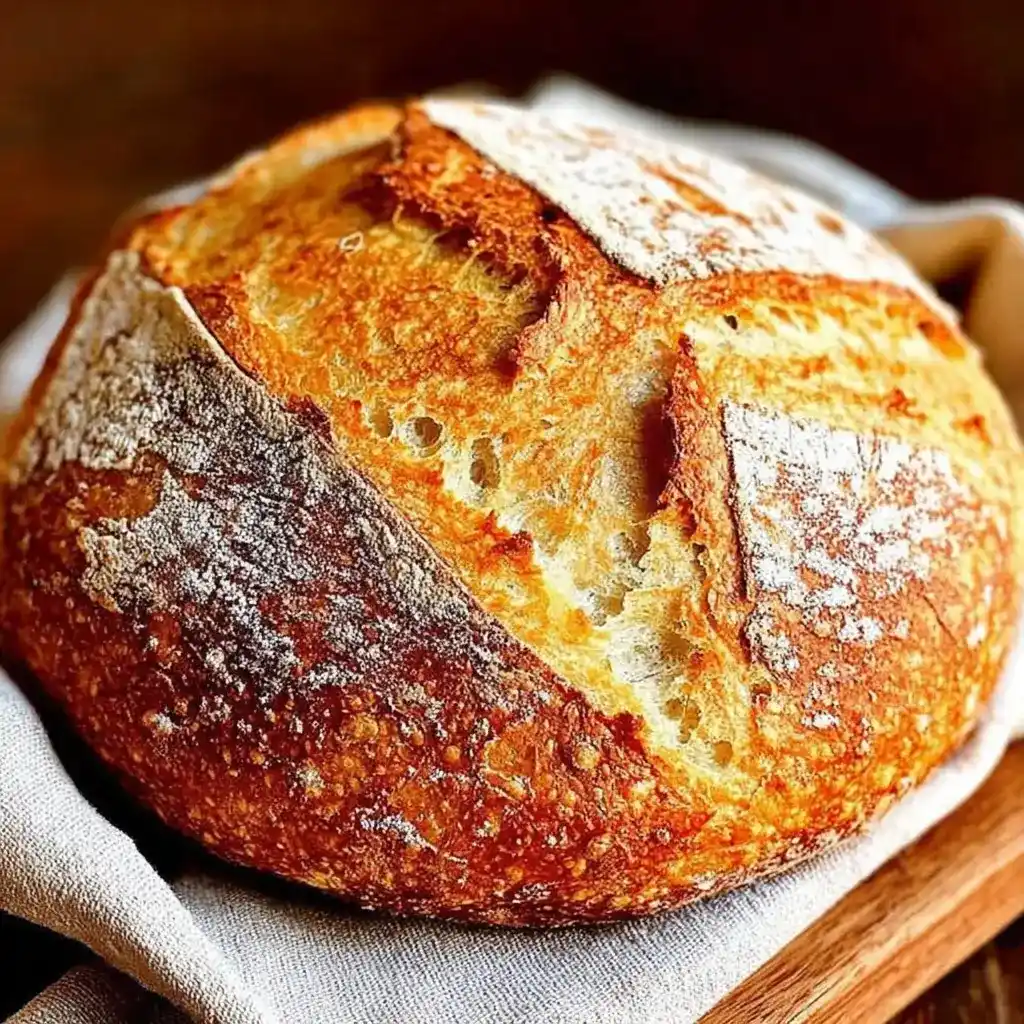
The most popular use for your starter—crusty on the outside, soft and tangy on the inside.
Sourdough Pancakes
Light, fluffy pancakes with a slight tang that tastes amazing with butter and syrup.
Sourdough Pizza Dough
Makes the best pizza crust with great flavor and perfect chewiness.
Sourdough Crackers
Thin, crispy, and perfect for cheese and dips—a great way to use discarded starter.
Sourdough Waffles
Crispy waffles with deep flavor pockets that hold syrup perfectly.
Sourdough Cinnamon Rolls
Soft, sweet rolls with that special sourdough flavor that makes them extra special.
Sourdough Bagels
Chewy, delicious bagels with that traditional tang and perfect texture.
Sourdough Biscuits
Flaky, buttery biscuits that are perfect for breakfast or dinner.
These recipes make the most of your hard work creating this Sourdough Starter Recipe.
Storage Instructions
Taking care of your Sourdough Starter Recipe is easy once you know how to store it properly.
How to Store:
On the Counter (for daily baking): Keep your starter in a glass jar at room temperature. Feed it once or twice a day. This keeps it ready to bake with anytime.
In the Refrigerator (for weekly baking): If you only bake once a week, keep your starter in the fridge. Take it out, feed it, let it sit at room temperature for a few hours until bubbly, then put it back. Feed once a week.
In the Freezer (for long breaks): You can freeze your starter for up to a year. Put it in a sealed container. When you want to use it again, thaw it at room temperature and feed it daily for 3-5 days until it’s active again.
Reviving a Neglected Starter:
If you forgot to feed your starter and it has liquid on top (called hooch), just pour it off or stir it in, then feed as normal. It usually bounces back in 1-2 feedings.
Estimated Nutrition (Per Serving – Based on 8 Servings)
Please note this is an approximate breakdown and may vary based on exact ingredients used.
| Nutrient | Amount Per Serving |
|---|---|
| Calories | 60 |
| Protein | 2g |
| Carbohydrates | 13g |
| Dietary Fiber | 0.5g |
| Sugar | 0g |
| Total Fat | 0.2g |
| Saturated Fat | 0g |
| Unsaturated Fat | 0.2g |
| Trans Fat | 0g |
| Cholesterol | 0mg |
| Sodium | 0mg |
This Sourdough Starter Recipe is low in calories and fat—it’s mostly just flour and water with natural yeast.
Frequently Asked Questions
1. How long does it take to make a Sourdough Starter Recipe?
Usually 7-10 days for your starter to be strong and ready for baking. Some starters take up to 14 days depending on your kitchen temperature and flour type.
2. Can I use tap water or does it need to be filtered?
Tap water works fine in most places. If your tap water has a lot of chlorine, let it sit out overnight before using, or use filtered water.
3. Why does my starter smell bad?
A sour, yogurt-like smell is normal and good. If it smells like nail polish remover or very strong alcohol, it’s just hungry—feed it and it will smell better.
4. Can I make a Sourdough Starter Recipe with gluten-free flour?
Yes, but it works differently. Use a mix of gluten-free flours and be patient—it might take longer to get active.
5. What is the liquid on top of my starter?
That’s called hooch. It means your starter is hungry. You can pour it off or stir it back in, then feed your starter right away.
6. Can I speed up the process?
Not really. Good things take time. But keeping your starter in a warmer spot (around 75-80°F) can help it develop a bit faster.
7. Do I really have to throw away half every time I feed?
Yes, otherwise your jar will overflow and the starter becomes too weak. But you can use the discarded starter in pancakes, crackers, and other recipes instead of throwing it away.
8. How do I know when my Sourdough Starter Recipe is ready to bake with?
When it doubles in size within 4-8 hours after feeding and passes the float test (a spoonful floats in water), it’s ready to use.
Conclusion
Making your own Sourdough Starter Recipe is one of the most rewarding kitchen projects you can try. With just flour and water, you create something alive that makes the best bread you’ve ever tasted. Yes, it takes time and daily care, but the results are absolutely worth it.
Perfect for anyone who loves baking, wants to try something traditional, or just enjoys watching science happen in the kitchen, this Sourdough Starter Recipe is a game changer. Plus, once you have it going, you can keep it alive for years and years. So grab your jar and start your sourdough journey today.

Sourdough Starter
Ingredients
Equipment
Method
- Day 1: Mix flour and water in a clean jar until smooth.
- Cover loosely with a cloth or lid and let it sit at room temperature.
- Day 2: Check for bubbles; stir the mixture once.
- Day 3: Discard half of the starter and feed with fresh flour and water.
- Day 4: Repeat discarding half and feeding again.
- Day 5: Continue feeding until the starter is bubbly and doubles in size.
- Once active, the starter is ready to use or store in the refrigerator.
Video
Notes
- Use filtered water to avoid chlorine affecting fermentation.
- Warmer environments speed up fermentation.
- If no bubbles appear, continue feeding for a few more days.
- A slightly sour smell is normal; a foul smell means discard and restart.